
 Nick is 31 years old and lives with his mom and dad, who have spent his life helping him build a meaningful place in the world. He is autistic and nonverbal, communicating primarily through an app on his iPad, along with a few signs and spoken words. Even without many spoken words, Nick makes his preferences, excitement, and determination clear every day through his actions and his deep desire to be part of his community.
For Nick, self-direction is what makes that life possible. Self-direction gives him the ability to make choices about how he spends his time, who supports him, and how he engages with the world around him. It allows his supports to be built around his needs, his communication style, and his safety, rather than expecting him to fit into a one size fits all model. This level of individualization is critical for Nick, who needs consistent, attentive support to safely participate in his community.
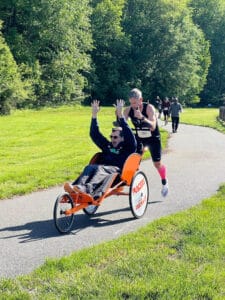
With self-direction in place, Nick’s days are full, active, and centered on the things that matter most to him. He works with a personal trainer, visits the library, and volunteers at a local animal shelter and his dentist’s office, where he helps assemble goodie bags. He shops for items to donate to a local women’s shelter, prepares small care bags for people experiencing homelessness, and works daily on life skills that help him grow more confident and capable.
Nick finds joy in being out and about. He loves going out to eat, shopping at Target and Hobby Lobby, bowling, attending baseball games, visiting the train station, going to the movies, and traveling whenever he can. At his local Moose Lodge, Nick is not just a member but a beloved presence. He knows people wherever he goes and is known affectionately as “The Mayor,” a nickname that reflects how connected he is to his community.
Just as important as choice is safety. Nick is impulsive and requires constant supervision, especially in busy community settings. His ability to live fully outside the home depends on having support staff who know him well, understand how he communicates, and can anticipate his needs before curiosity turns into danger. This kind of awareness and trust takes time to build and relies on consistency in his support team.
Nick’s self-directed support staff are people who truly know him, and that consistency is essential. Because they understand his cues and behavior, they are able to balance freedom and safety in a way that allows Nick to make choices while remaining protected. Their familiarity allows him to participate in the community with confidence, dignity, and security.
 Self-direction also allows resources to be used in a targeted and thoughtful way. Through self-direction, Nick’s services are designed specifically around his needs, ensuring that supports are focused on meaningful outcomes such as community participation, volunteering, skill development, and safety. This individualized approach helps ensure that public dollars are used efficiently and effectively, supporting real impact in Nick’s life.
All of this depends on stable, fairly compensated self-directed staff. Nick’s safety and progress rely on experienced caregivers who can commit to supporting him long term. Cutting wages for self-directed staff would put that stability at risk, disrupting the consistency Nick depends on and limiting his ability to safely participate in the community.
When Nick was about a year and a half old, a doctor told his parents he would never walk, talk, or have a good quality of life. Today, Nick’s life tells a very different story. Through self-direction, he continues to grow, learn, and thrive, surrounded by people who know him best and supported to live life on his own terms.
Nick’s story shows what is possible when self-direction is protected. It leads to meaningful lives, safer communities, strong supports, and public resources used in ways that truly make a difference.