
For Al and his family, self-direction has meant something deeply personal: choice. According to his mother, Alicia, self-direction allows Al to d ecide what he does, when he does it, where he goes, and who he spends time with. Before adulthood, school environments were often overwhelming, filled with large groups, rigid schedules, and limited choices. “He didn’t like being told what to do or when to do it,” Alicia explained, “and people didn’t really understand his capabilities.”
Although Al is verbal, his speech can be difficult for others to understand, which often led to frustration and lowered expectations in more traditional settings. Too often, Alicia shared, communication challenges were mistaken for a lack of understanding. Self-direction changed that dynamic. By hiring his own staff, Al is surrounded by people who take the time to learn how he communicates, presume competence, and respect his preferences. “Self-direction is really about flexibility and control of your environment,” Alicia said. “It’s given Al the opportunity to just be himself.”
With self-direction, Al chooses how and when to participate in the community based on his interests, comfort level, and how he is feeling each day. He enjoys being outdoors, visiting waterfalls and hiking trails, exploring train exhibits like the B&O Railroad Museum, and discovering new places at a pace that works for him. His team uses visual supports, written stories, photos, and videos to help him prepare for new experiences, reducing anxiety and building confidence. His team carefully builds supports around what works best for Al, prioritizing consistency, safety, and quality of life.
That same intentional approach extends to how Al’s family uses funding. Through self-direction, he is able to match supports to real needs rather than fitting Al into a predetermined program model. During Fiscal Year 2025, Al used just 53 percent of his allotted self-direction budget.
For Al, self-direction is not about doing more with less – it’s about doing what actually works and ensuring that funding supports real life, not rigid systems.
Al’s self-directed team is built on long-standing relationships and mutual respect. One of his primary support professionals has been part of Al’s life for more than a decade, dating back to his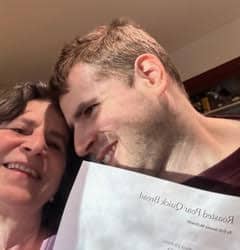 school years. That consistency has been invaluable for both Al and his family. He also works with additional staff who bring positivity, structure, and encouragement, all carefully chosen for their ability to connect with him. Alicia emphasized how important it is that staff are emotionally attuned, as Al is sensitive to others’ moods and reactions.
Another exciting development in Al’s journey has been growth in communication. In addition to verbal speech, Al has begun expressing himself more fully through typing and text messaging. This has opened a new window into his thoughts, humor, opinions, and preferences. Alicia shared moments when Al texted her observations, requests, and even self-advocacy in real time—moments that might otherwise have gone unheard. “People don’t know what someone is thinking just because they can’t speak clearly,” she said. “But there’s a lot going on in there.”
For Alicia, as well as Al’s father, Dave, self-direction represents more than a service model. It is a way for people who do not fit neatly into standardized systems to build meaningful lives, relationships, and routines that reflect who they truly are. “The person’s choices, in any given moment of any given day, are paramount,” she shared. Al’s story is a powerful reminder that when individuals are trusted, supported, and given control over their lives, they can thrive in ways that are both visible and deeply human.