
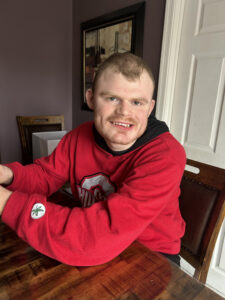
 Noah is 24 years old. He is autistic and experiences the world differently, with needs that require consistency and care. He is also deeply social, active, and happiest when he is out in the community, surrounded by familiar faces and meaningful routines.
For Noah and his parents, self-direction is not optional. It’s what makes daily life possible.
After transitioning out of the school system, Noah’s family explored traditional provider-based services. But in the aftermath of the COVID-19 pandemic, most providers were only able to offer limited in-person hours or virtual programming. For a young man who needs hands-on, constant supervision and thrives on movement and routine, that model simply did not work.
Self-direction did.
Through self-direction, Noah follows a highly structured, seven-day-a-week schedule designed around his needs, goals, and safety. His days include bowling, swimming, mini golf, walking at a community center, therapy pool sessions, and frequent visits to museums, the aquarium, and historic sites. He volunteers regularly, including at the Humane Society, where he helps with simple but meaningful tasks.
Noah loves people. He recognizes familiar faces at the gym, grocery store, and community spaces, and those relationships matter to him. Self-direction allows him to build and maintain those connections, something that would not be possible in a more rigid, facility-based setting.
Noah’s self-directed team includes two full-time support professionals who have been with him consistently for more than three years, along with family members who provide additional support. That consistency is everything for Noah.
When part-time staff turnover occurs, training often does not reach completion. The work is demanding, and without adequate wages, retention becomes nearly impossible. Proposed cuts to SDS wages would threaten not just staffing levels, but Noah’s safety, stability, and progress. Losing trusted staff would mean starting over, rebuilding trust, retraining caregivers, and putting Noah at risk during that transition.
Self-direction is also cost-effective tailored precisely to what Noah needs. Public dollars are used efficiently to support community participation, skill development, safety, and family stability. Without these supports, Noah would likely be confined to his home; pacing, disengaged, and unable to participate meaningfully in the community, while his parents would be unable to maintain full-time employment.
Noah’s story shows what happens when self-direction is protected: people thrive, families stay stable, communities benefit, and public funds are used wisely. But these outcomes depend on one critical factor – valuing and fairly compensating the direct support professionals who make this work possible.
Protecting self-direction means protecting lives like Noah’s.