
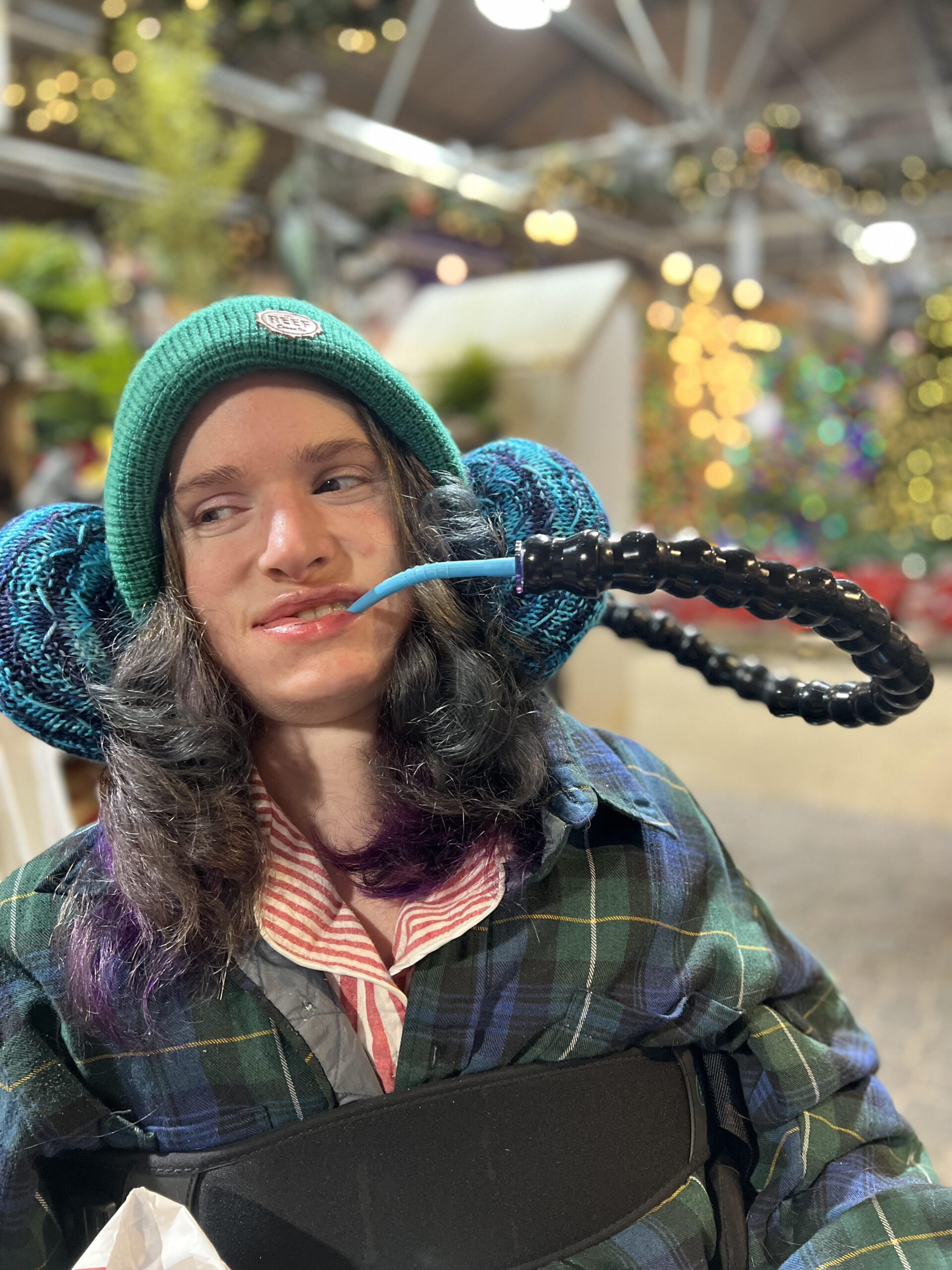
 For Charlotte, self-direction is the reason her independence didn’t disappear when her physical needs changed. It is also the reason why she is able to live independently, work remotely, and build a life that reflects her goals rather than her limitations.
Charlotte is a college graduate living with a progressive neuromuscular disease that affects her mobility from the neck down. After graduating, she pursued highly competitive federal career paths and accepted a position with a national agency. By the time the offer arrived, however, it became clear that a traditional in-person work schedule was not sustainable. As her physical needs changed, so did her need for flexible, individualized supports.
Self-direction made that possible.
“Self-direction gave me a way to find work that fit my body and my life,” Charlotte explains. “It allowed me to build care around my reality, not force myself into something that wasn’t safe or stable.”
Before self-direction, Charlotte relied primarily on her family for care, with limited outside support. That arrangement eventually became unsustainable. At 28, she knew she needed independence, but without the right services in place, moving out felt impossible. Through self-direction, Charlotte was able to leave an unhealthy living situation and move into her own apartment, where she now lives independently with roommates who also serve as her caregivers.
This model works because Charlotte has choice and control over who supports her and how those supports are delivered. For her, caregivers are not interchangeable. “I can’t just accept constant turnover,” she says. “These are the people who become my hands. Trust and consistency are everything.”
That trust depends on fair and stable wages. Charlotte is clear that proposed cuts to self-directed staff wages would be devastating. “My independence and my lifestyle are predicated on being able to retain staff,” she says. “If people can’t afford to stay, everything else falls apart.”
Charlotte wants people to understand that self-direction is not about excess. It is about equity. “It provides a way for individuals with rare or expensive developmental disabilities to live a life as close to what an able-bodied counterpart would live as possible,” she said. Today, Charlotte works remotely, manages her own care, and continues to build a future on her own terms. Self-direction gave her the tools to do that.
Charlotte’s story shows what self-direction can achieve when it is treated not as a luxury, but as essential infrastructure for independence.