
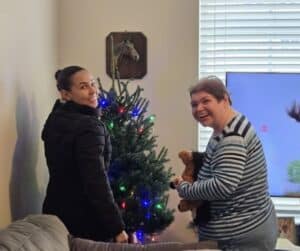
For Anneke, self-direction has meant reclaiming her life and living as an individual, not being defined by a schedule or a system. After years of navigating traditional, one-size-fits-all services, self-direction gave Anneke the ability and flexibility to shape her life around her actual needs, health, and well-being, with support from people who know her best.
Prior to self-direction, Anneke struggled in state-run programs that required rigid routines and constant transitions. Over time, those environments took a toll. During her time in Adult Day Care, Anneke faced serious health challenges that led to significant weight gain, eventually reaching 260 pounds. She became increasingly withdrawn, lost interest in daily life, and experienced declining mobility, at one point becoming wheelchair dependent. It became clear that standardized services were not meeting her needs.
Everything began to shift when Anneke transitioned to self-direction and began exercising greater control over how her days looked and who supported her, with her family playing an important role in helping her build a strong, consistent team.
Through self-direction, Anneke was able to focus on what she needed most: time at home, flexibility, and personalized physical activity. With steady attention and a pace that respected her body, she began making meaningful progress.
 With patience and steady encouragement from those around her, including her father, Anneke made remarkable gains. Over the course of a year, she lost significant weight and regained her ability t
o walk independently. She transitioned from relying on a wheelchair to moving confidently on her own. Self-direction made it possible for Anneke to rebuild her strength safely, without pressure or rigid expectations.
A year or two later, Anneke experienced a health setback that required renewed focus and adjustment. Once again, self-direction allowed her team to respond quickly and thoughtfully, adapting routines and activities to support her recovery while maintaining stability and consistency.
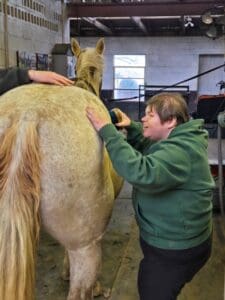
One of the greatest sources of joy in Anneke’s life has always been horses. Introduced to therapeutic riding at a very young age, she spent years riding and working alongside her father, a professional horseman. Even when health challenges made riding uncomfortable, Anneke remained deeply connected to the horses, helping with grooming, spending time at the farm, and attending horse races. Being around horses continues to bring her joy and happiness.
Today, Anneke’s self-directed team supports her in ways that prioritize dignity, comfort, and choice. Instead of being rushed out the door each morning, she begins her day at home, supported by staff who assist with personal care, meals, and daily routines. This approach allows Anneke to live on her own terms, with structure that supports her rather than overwhelms her.
Self-direction has also allowed Anneke to use her resources efficiently, with guidance from her family. Rather than funding full-day programs or services that did not align with her needs, Anneke directs
resources toward approaches that actively contribute to her health, safety, and continued progress. This intentional use of funding ensures that services are not only person-centered, but also practical and effective.
By aligning her care with real needs instead of fixed program rules, self-direction helps avoid unnecessary costs while creating positive outcomes. Anneke’s experience shows that flexibility and individualized planning are not only better for quality of life, but also a responsible use of public resources. Funding is used where it matters most: supporting stability, preventing regression, and helping Anneke thrive safely at home and in her community.
While staffing shortages and the need for hands-on involvement remain challenges, self-direction has allowed Anneke, with the support of her family, to build a life that fits her. With carefully chosen assistance and consistent routines, Anneke has regained stability and a sense of self. For Anneke, self-direction means restoring her humanity. It means being seen not as a diagnosis or a placement, but as a person with her own preferences, relationships, and a life deserving of care, dignity, and opportunity.
As her father puts it: “Self-direction gave Anneke her individuality back.”